The Womb in Silicon: Indigenous ‘Placenta-on-Chip’ and the Future of Ethical Drug Testing
Summary Glossary
• Placenta-on-Chip: A microfluidic device that replicates the physiological and mechanical environment of the human placenta.
• ICMR-NIRWoH: National Institute for Research on Women's Health, Mumbai (formerly NIRRCH).
• Microfluidics: The science of manipulating and controlling fluids at a sub-millimeter scale.
• Gestational Diabetes: A type of high blood sugar that develops during pregnancy and can affect the health of both the mother and the baby.
• Data Desert: A term describing the lack of clinical data for specific demographics (like pregnant women) due to ethical or logistical exclusions.
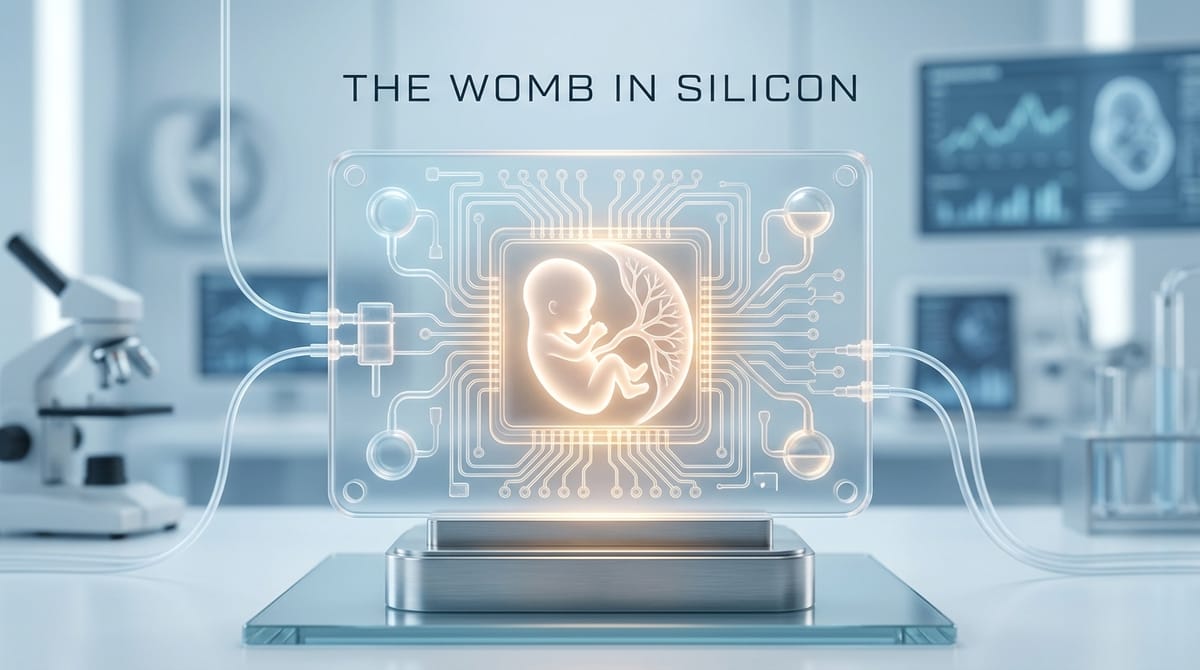
On July 4, 2026, researchers from ICMR-NIRWoH and IIT Bombay unveiled an indigenous 'placenta-on-chip' platform. While it may look like a simple piece of polymer, this device is a sophisticated engineering feat that recreates the 'gatekeeper' function of the human womb. For the Indian medical landscape, this isn't just a laboratory curiosity; it is a vital bridge over the 'Data Desert' that has plagued maternal health for decades.
Recreating the Human Barrier
The placenta is arguably the most mysterious organ in the human body. It serves as a biological filter, deciding which nutrients reach the fetus and which toxins are blocked. Until now, studying this barrier meant relying on animal models (which often fail to mimic human placental biology) or wait-and-see clinical observations.
The Indian platform uses microfluidics to allow maternal and fetal cells to interact under controlled blood-flow conditions. By mimicking the mechanical stresses and chemical gradients of a real womb, scientists can now observe—in real-time—how a drug molecule or a virus crosses from mother to child.
Why India Needs This Now
India faces a dual challenge: high maternal mortality rates and a surging incidence of gestational diabetes and pre-eclampsia. Historically, pregnant women have been excluded from clinical trials for new drugs due to the perceived risk to the fetus. This has created a paradoxical situation where mothers are prescribed medications that have never been rigorously tested on 'human' placental models.
By developing a scalable, cost-effective chip that doesn't require high-end specialized equipment, the ICMR-IIT team has democratized this research. Small-scale Indian pharma labs can now test drug safety locally, moving toward a future where 'Sovereign Science' protects the most vulnerable.
Editorial Deduction: Ethical De-risking
At BharatLens, we deduce that the true value of the 'Placenta-on-Chip' lies in its ability to provide 'Ethical De-risking.' For too long, the medical community has treated pregnancy as a biological outlier, leading to a massive gap in pharmaceutical safety data.
This technology allows us to stop treating pregnant women as an 'exclusion category' and start treating them as a 'priority demographic.' By providing a human-centric model that bypasses the ethical hurdles of live trials, India is positioning itself as a leader in 'Inclusive STEM.' This isn't just about silicon and cells; it's about reclaiming the narrative of maternal health from a history of exclusion and uncertainty.
Sources
• Biofabrication: Indigenous Placenta-on-Chip Platform - July 4, 2026
• ICMR-NIRWoH: Press Release: Maternal and Fetal Health Innovation
• IIT Bombay: Department of Chemical Engineering: Microfluidics for Healthcare
• The Times of India: Indian scientists recreate key functions of human placenta on chip
Comments ()