The Kolkata Collapse: Why the TMC Split is an Obituary for the Federal Front
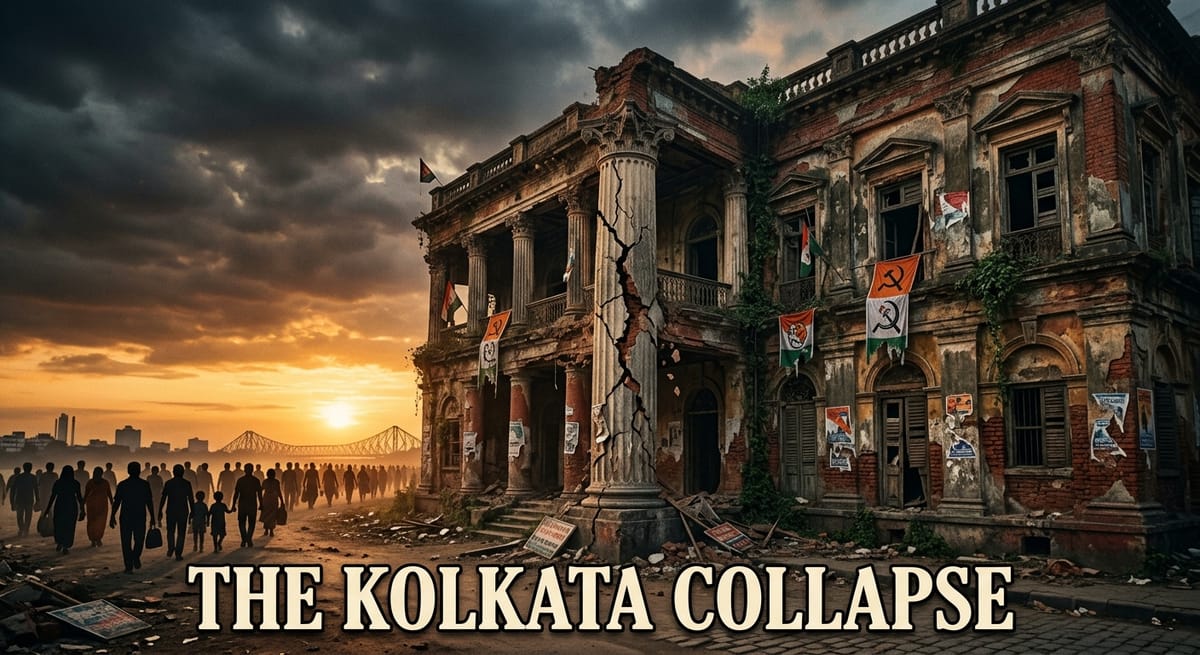
• The Two-Thirds Threshold: 20 out of 28 TMC Lok Sabha MPs have formed a rebel faction, reaching the critical mass needed to avoid disqualification under the Anti-Defection Law.
• The "Real TMC" Claim: Led by Kakoli Ghosh Dastidar, the rebels will move the Lok Sabha Speaker on June 15 to be recognized as the official Trinamool Congress, mirroring the Shiv Sena split strategy.
• The Strategic Pivot: The rebellion signals a massive shift in the national balance of power, as the faction indicates a willingness to support the NDA, effectively crippling the INDIA bloc’s resistance.
• The Regional Roots: The split is the direct aftershock of the TMC’s crushing defeat in the April 2026 West Bengal Assembly elections, proving that charismatic leadership cannot survive systemic electoral collapse.
Political parties don't usually die in a day; they rot from the edges until the center can no longer hold. For the Trinamool Congress (TMC), the center gave way today. Twenty of its 28 Lok Sabha MPs claiming the "Real TMC" title is more than a party split—it is a formal obituary for the INDIA bloc as a viable parliamentary force.
Led by Kakoli Ghosh Dastidar and backed by veterans like Sudip Bandyopadhyay, this isn't a minor dissent. It is a surgical extraction of the party’s parliamentary heart. The timing is cold and precise. By waiting until they hit the 20-MP mark, the rebels secured the two-thirds majority required to split without losing their seats. They have internalized the lessons of the Shinde and Pawar maneuvers: in modern Indian politics, legitimacy is determined by the Speaker's gavel, not the party's constitution.
The catalyst isn't just internal friction; it's the wreckage of the April 2026 West Bengal Assembly elections. For a decade, the TMC’s national weight was anchored in its absolute dominance of Bengal. With that dominance shattered at the polls, the internal glue—access to power and resources—has evaporated. This rebellion is a rational response to a sinking ship. These MPs aren't just abandoning a leader; they are abandoning a political model that can no longer guarantee their survival.
The local obsession with the rivalry between Mamata Banerjee and Suvendu Adhikari is a distraction. The real story is the death of the "strong regional satrap" as a national counterbalance. If the most disciplined and combative regional party in India can be hollowed out within weeks of an electoral defeat, the Federal Front model is defunct.
For the NDA, this is a strategic windfall. By neutralizing the TMC, they have removed the opposition's most aggressive voice. We are witnessing the transition of India’s parliamentary system from a multipolar struggle to a unipolar consolidation. The "Kolkata Collapse" isn't just Bengal's problem; it is the final act of the opposition’s 2026 collapse.
• The Times of India: TMC crisis deepens as MP Sudip Bandyopadhyay may join rebels.
• Deccan Herald: TMC Rebellion - List of rebel MPs rumoured to be growing.
• The Hindu: NDA nears two-thirds majority in Rajya Sabha amid opposition defections.
Comments ()