The Jailor’s Veto: Why the 130th Amendment is a Watershed for Indian Federalism
Summary Glossary
• The 130th Amendment: A proposed constitutional change mandating the automatic removal of a Prime Minister, Chief Minister, or Minister if they remain in custody for 30 consecutive days.
• JPC Deadline: The Joint Parliamentary Committee (JPC) is set to adopt its final report on July 17, 2026, ahead of the Monsoon Session.
• The 30-Day Clock: Removal is triggered automatically on the 31st day of detention for offenses punishable by 5+ years of imprisonment.
• The Political Pivot: This bill is a direct legislative response to the "governance-from-jail" precedents set in 2024, aiming to codify institutional vacancies.
The 31st Day: The End of 'Governance-from-Jail'
For decades, the removal of a Prime Minister or a Chief Minister was a purely legislative act. It required a floor test, a no-confidence motion, or a voluntary resignation. But as the 130th Constitution Amendment Bill, 2025, nears its final JPC hurdle on July 17, that era is effectively over. The "31st day" is becoming the new constitutional boundary. By mandating the automatic removal of an elected head of government after 30 days in custody, the state is attempting to close a loophole that was once unthinkable but is now a recurring political reality.
The logic is presented as one of administrative necessity: a state cannot be run by a ghost in a cell. But for the Indian reader, the subtext is much louder. This isn't just about "governance continuity"; it is about codifying the consequences of an arrest. By turning an investigative remand into a constitutional vacancy, the bill moves the "kill switch" of an elected government from the floor of the House to the desk of an investigative officer. This is the legalization of political fallout.
The Deductive Leap: The Rise of the 'Jailor's Veto'
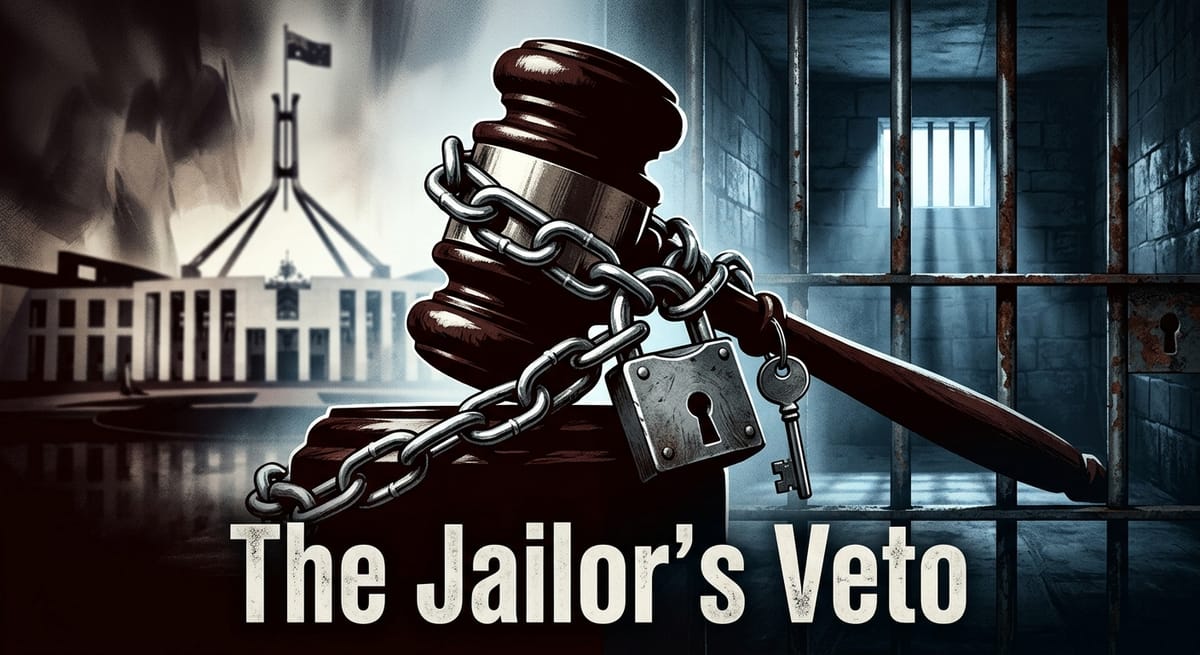
The most significant deduction for the BharatLens desk is the emergence of the "Jailor's Veto." Traditionally, the separation of powers ensured that the executive (police/agencies) could not unilaterally unseat the legislature. Under the 130th Amendment, this boundary blurs. If an agency—controlled by a rival political center—can secure a 30-day remand, it can effectively trigger a change in government without ever facing a vote of the people.
This creates an inherent instability in the federal structure. For a state Chief Minister, the threat of a central agency arrest is no longer just a legal hurdle; it is a direct threat to their democratic mandate. The "30-day clock" becomes a weaponized countdown. The deduction is sharp: we are moving toward a model where the "Integrity of the Office" is being prioritized over the "Mandate of the People." While this might prevent the spectacle of governing from a cell, it risks making the Prime Minister’s or Chief Minister’s chair a permanent hostage to investigative discretion.
The Sovereign Hedge: Federalism in the Crosshairs
The JPC's report is expected to include some "safeguards," but the core 30-day provision is likely to remain. This is the ultimate hedge against what the center views as "constitutional anarchy." However, it fundamentally reorders the hierarchy of Indian democracy. By institutionalizing removal via custody, the 130th Amendment shifts the center of gravity away from the voter and toward the court-room and the lock-up.
For the BharatLens desk, the conclusion is clear: we are witnessing the final consolidation of the "Rule of Procedure" over the "Rule of Politics." In the 2020s, the battle for power in India is no longer just won at the ballot box; it is won in the duration of a remand. As the bill moves toward the Monsoon Session, the question isn't just whether a CM can govern from jail, but whether our constitutional structure can survive the removal of the human element in the removal process. The clock starts ticking on July 17.
Sources
• Indian Express: JPC Set to Clear 130th Amendment on PM, CM Removal After 30-Day Custody
• PRS India: Bill Track: The Constitution (One Hundred and Thirtieth Amendment) Bill, 2025
• Telegraph India: The Politics of 30 Days: How the New Amendment Reorders Governance
• Economic Times: Monsoon Session Preview: The Push for the 'Jail-Removal' Bill
Comments ()