The Human Capital Pivot: Why NITI Aayog’s 11th Council is a Move Toward 'Precision Welfare'
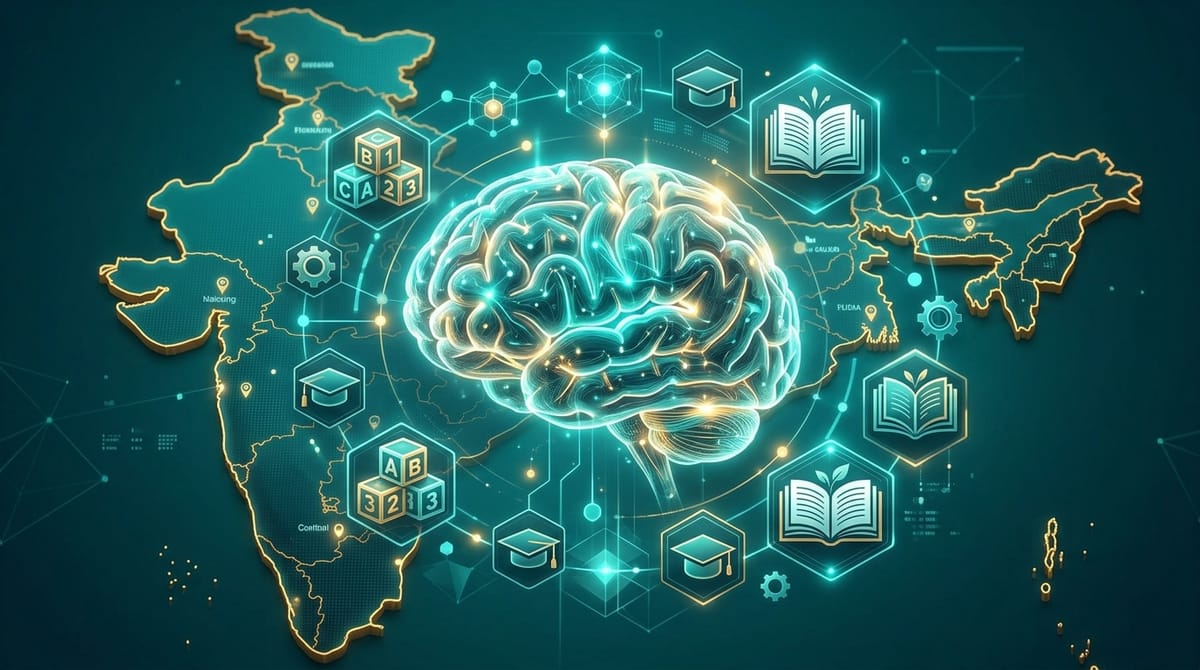
• The Goal: Transitioning from general scheme implementation to a four-pillar Inclusive Human Development Framework.
• The Tech Layer: Integration of Digital Public Infrastructure (DPI) to track real-world, per-citizen development outcomes.
• Foundational Shift: A strategic focus on Early Childhood Care and Education (ECCE) as the primary engine for 'Viksit Bharat'.
• Decentralized Growth: Moving skilling and entrepreneurship mandates from New Delhi directly to District-level ecosystems.
The 11th Governing Council meeting of NITI Aayog, chaired by Prime Minister Narendra Modi today, was ostensibly about the 2047 roadmap. But beneath the "Team India" optics of Chief Ministers and Union Ministers at Rashtrapati Bhavan, a fundamental structural shift was being proposed. India is attempting to move from "Broadcast Welfare"—where schemes are launched at scale—to "Precision Welfare," where outcomes are tracked at the level of foundational human capital.This is the most critical evolution of the Indian developmental state since the shift from the Planning Commission to NITI Aayog.
The Four Pillars of Human Capital
The meeting codified a new "Inclusive Human Development Framework" built on four pillars: Foundational Human Capital, Productive Employment, Health/Wellbeing, and Equity. While these sound like standard developmental jargon, the inclusion of "Future-Ready Skills" as a foundational metric marks a departure.
The council is effectively acknowledging that India’s demographic dividend is not a guarantee; it is a perishable asset. By linking skilling directly to "Decentralized Growth," the government is attempting to solve the "urban-migration-as-default" trap. The goal is to create viable economic clusters in Tier-2 and Tier-3 cities by fostering local entrepreneurship rather than just waiting for global supply chains to dock at major ports.
The DPI Advantage: Tracking the Intangibles
The true differentiator in this 2047 roadmap is the reliance on Digital Public Infrastructure (DPI). For decades, developmental monitoring was limited to inputs: how many toilets built, how many bank accounts opened.
The 11th Council’s emphasis on "data-driven systems for monitoring long-term outcomes" suggests a move toward tracking the intangibles. How much did a specific nutrition scheme actually improve cognitive markers in children under five? How effectively did a skilling module translate into a 20% increase in local income? By using DPI as a feedback loop, India is building a "Live Dashboard" for national development.
The BharatLens Deduction: The ECCE Battleground
The most understated but vital part of today’s meeting was the review of recommendations from the National Conference of Chief Secretaries on Early Childhood Care and Education (ECCE).
Our deduction is clear: The government has realized that the race for 2047 will be won or lost in the next five years of pre-primary education. If the "foundational" layer of human capital is weak—meaning if children aren't hitting nutritional and cognitive milestones before they enter formal schooling—no amount of later-stage "Higher Education" reform can fix the deficit.
The 11th Council meeting tells us that the focus is shifting away from the "visible" infrastructure of highways and bridges toward the "invisible" infrastructure of the human mind. It is a bold, science-backed bet on the long game.
Sources
• NITI Aayog: Press Release on 11th Governing Council Meeting. www.niti.gov.in
• Times of India: PM Modi to chair NITI Aayog meeting on Inclusive Human Development. timesofindia.indiatimes.com
• Economic Times: Implementation roadmap for Viksit Bharat @2047. economictimes.indiatimes.com
• News on Air: PM Modi chairs meeting at Rashtrapati Bhavan. newsonair.gov.in
Comments ()