The Hormuz Friction: Why the Death of Indian Mariners is a Breaking Point for Indo-US Maritime Ties
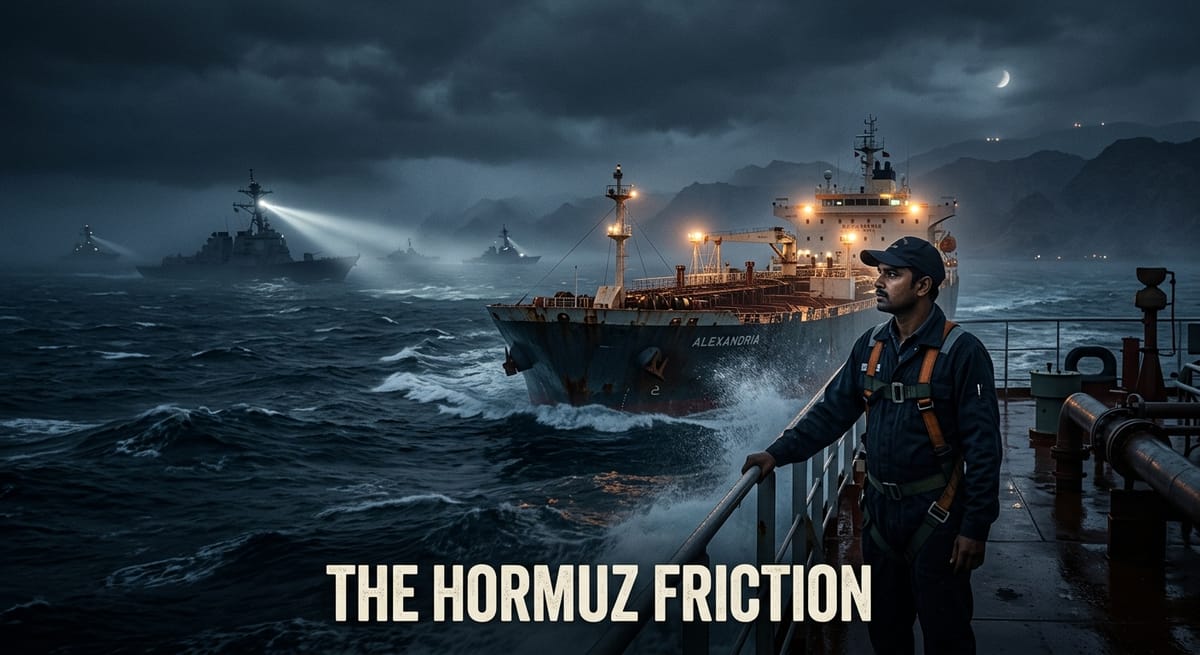
• The Deadly Crossfire: External Affairs Minister S. Jaishankar has raised the issue of three Indian mariner deaths with US Secretary of State Marco Rubio, following US military actions in the Gulf of Oman.
• The Blockade Clash: The US is enforcing a strict blockade on Iranian oil shipments, while India maintains that the safety of its crew and trade lanes is non-negotiable.
• Strategic Autonomy: This incident highlights the growing friction between India’s energy needs and the US’s regional enforcement, testing the limits of the "Indo-Pacific" partnership.
• Human Capital Cost: Beyond geopolitics, the story focuses on the vulnerability of the global maritime workforce—largely Indian—in geopolitical shadow wars.
Diplomacy is often conducted in cooled rooms with polished words, but its failures are felt on the blistering decks of commercial tankers. The recent deaths of three Indian mariners in the Gulf of Oman—caught in the tightening vise of the US-enforced blockade on Iranian oil—has brought a rare, sharp edge to Indo-US relations.
External Affairs Minister S. Jaishankar’s call to US Secretary of State Marco Rubio wasn't just a standard diplomatic "concern." It was a signal that for New Delhi, the "Strategic Partnership" has a breaking point: the lives of its citizens and the security of its energy lifelines.
The Enforcement Vise
The US stance is clear: any vessel violating the blockade on Iranian oil is a target for seizure or kinetic intervention. From Washington’s perspective, this is about neutralizing a regional adversary. But from New Delhi’s perspective, these trade lanes are the jugular of the Indian economy.
When the US military intervenes in the Strait of Hormuz or the Gulf of Oman, the "collateral damage" isn't just an abstract term. It is the Indian sailor, the backbone of global shipping, who finds themselves in the crosshairs of a war they didn't start and a blockade they have no power to stop.
Connecting the Dots: The 'Indo-Pacific' Illusion
For years, the "Indo-Pacific" has been framed as a shared vision of a "free and open" maritime order. However, the Hormuz crisis reveals a fundamental divergence. While the vision works when countering a shared rival in the South China Sea, it becomes a friction point when US regional enforcement directly threatens Indian maritime safety.
The US expects compliance with its unilateral sanctions. India, however, has consistently maintained that it only recognizes UN-mandated sanctions. This isn't just a legalistic debate; it is a fundamental clash of sovereign priorities.
The Editorial Deduction: Sovereignty in the Shallows
Most outlets will frame this as a "tragedy" or a "diplomatic hurdle." They are missing the systemic shift.
India is realizing that its maritime security cannot be outsourced to a "partner" whose regional interests may occasionally turn hostile to Indian lives. The deduction is clear: Expect India to accelerate its own maritime security presence in the Western Indian Ocean, moving beyond "anti-piracy" to "escort diplomacy."
If New Delhi cannot trust the US to distinguish between a blockade runner and a commercial vessel with an Indian crew, it will be forced to provide its own shield. The Strait of Hormuz is no longer just a trade route; it is the frontline where India’s "Strategic Autonomy" must be defended by more than just press releases.
• The Times of India: EAM calls Rubio on sailor deaths; US stands by attacks.
• DD India: Jaishankar raises deaths of Indian mariners with Rubio; US stresses compliance in Strait of Hormuz.
• The Hindu: Morning Digest - Maritime friction and Indo-US diplomatic updates.
Comments ()